
The use of artificial intelligence in organizations is growing rapidly. Generative AI tools, decision-support systems, and solutions integrated into business processes are already part of the daily operations of many companies. However, this technological advancement also introduces significant legal risks that are not always being properly managed.
The combination of the General Data Protection Regulation (GDPR) and the new European Artificial Intelligence Regulation (EIA) requires organizations to review how they are using AI, what data is being processed, and what controls must be implemented to ensure compliance with the law.
Looking ahead to 2026, AI will cease to be a purely experimental field and become a regulated environment, where a lack of control could result in penalties, operational risks, and significant reputational damage.
Key legal risks associated with the use of artificial intelligence
Organizations that already use artificial intelligence systems—or are considering implementing them—face a new regulatory landscape. Among the most common legal risks associated with the use of AI are:
- The processing of personal data without a clear compliance framework, which directly triggers the GDPR’s obligations regarding legal basis, transparency, rights, and security.
- Lack of awareness of the system’s risk level, as classified by the RIA, which could lead to significant non-compliance.
- Lack of impact assessments, particularly in high-risk cases or when innovative technologies with a significant impact on people are used.
- Lack of human oversight and internal controls in systems that influence or support automated decisions.
- Uncontrolled use of public or unauthorized AI tools, involving the input of personal data or confidential information.
In many cases, the greatest risk does not lie in the technology itself, but in how it is being used within the organization.
Risk classification in the European Artificial Intelligence Regulation
The European Artificial Intelligence Regulation establishes a risk-based approach, classifying AI systems into different categories based on their potential impact on individuals and society.
What is considered high-risk artificial intelligence?
Artificial intelligence systems are considered high-risk if they can significantly impact fundamental rights, security, or access to essential services. These systems are subject to specific legal obligations, and failure to comply with them may result in significant penalties.
Correctly identifying whether an AI system falls into this category is a key step for organizations in understanding the level of regulatory scrutiny to which they are subject.
Why it is crucial to address these risks now
The European Artificial Intelligence Regulation provides for a phased implementation of its requirements, with key dates that will determine the level of compliance expected of organizations.
This regulatory environment presents a clear opportunity for companies to stay ahead of the curve and address issues such as:
- An inventory of AI systems and use cases.
- Identification of the data being processed and the third parties involved.
- Risk classification in accordance with the RIA.
- The development of internal policies and best practices.
- Training and raising awareness among teams regarding the responsible use of AI.
Taking action now can help reduce legal and operational risks and avoid having to make reactive decisions once the regulations become fully enforceable.
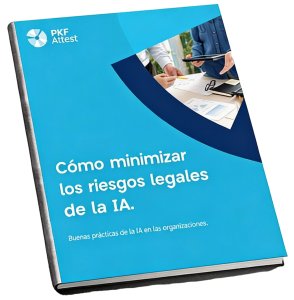
What you’ll find in the e-book: How to Minimize the Legal Risks of Artificial Intelligence
In the e-book “How to Minimize the Legal Risks of AI”, the PKF Attest GDPR team addresses one of the key challenges organizations face today: how to use artificial intelligence responsibly, in a controlled manner, and aligned with European regulations.
The document provides a clear and structured overview to help organizations understand what the use of AI actually entails from a legal perspective and how to begin navigating this new regulatory landscape without stifling innovation.
This guide is designed for those who need to make informed decisions, anticipate potential risks, and lay the groundwork for a more mature, secure, and legally compliant model for AI use.
Recommendation: Proactively assessing the impact of AI use within the organization and establishing an appropriate governance framework is key to avoiding legal and operational risks in the short and medium term.
Download our e-book: How to Minimize the Legal Risks of Artificial Intelligence
FAQ
The use of AI can entail risks related to data protection, automated decision-making, lack of transparency, regulatory violations, and potential financial and reputational penalties.
When it may significantly affect fundamental rights, security, or access to essential services, according to the classification established by the European Artificial Intelligence Regulation.
Because a lack of prior oversight could lead to legal, operational, and reputational risks once European regulations become fully enforceable.