
Salary management in companies is about to undergo a fundamental change. Until now, compensation has been based on individual negotiations, poorly documented criteria, and structures that are difficult to justify. From now on, that model is no longer viable.
With the European Pay Transparency Directive, transparency is no longer just a best practice but a legal requirement, particularly for companies with more than 50 employees. And time is running out:
🗓️ Spain has until June 7, 2026, to incorporate this regulation into its national legislation.
For many organizations, this means reviewing processes, organizing salary data, and preparing for a new environment that requires oversight, reporting, and objective justification of compensation decisions.
Why is pay transparency no longer optional?
In addition, the directive was created with a clear objective: to reduce the pay gap and ensure fair pay for work of equal value. It also introduces new requirements that directly affect HR, management, and legal teams.
Some of the key features of the new framework are:
- Clear and documented salary criteria are required.
- Workers' access to information on pay ranges and levels.
- Objective justification for pay differences exceeding 5%.
- New reporting and monitoring requirements, particularly for companies with 100 or more employees.
- Greater legal and reputational risk if reliable data is not available.
The lack of transparency leaves companies unable to defend themselves against complaints, inspections, or audits.
Download the Guide to Pay Transparency
Get a head start on the new regulations, reduce legal risks, and start developing a clear, fair, and justifiable compensation policy.
Download the e-book now and get ready to comply with the European Pay Transparency Directive.
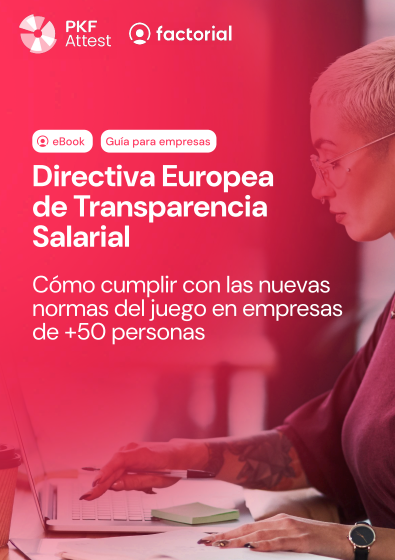
What You'll Find in the Guide to the European Pay Transparency Directive
To help businesses prepare for this change, we have developed a practical guide that translates the regulations into concrete actions.
In this ebook, you'll find:
- What Pay Transparency Is (and Isn't).
- A checklist to assess your company's level of preparedness.
- Current data on the wage gap in Spain and Europe.
- What exactly changes with Directive (EU) 2023/970, and when does each requirement apply?
- Differences in impact based on company size (+50, +100 employees).
- A clear action plan to prepare structures, processes, and data by 2026.
That’s why this e-book includes: a guide designed for HR managers, executives, and teams who need structure, clear guidelines, and legal certainty—without last-minute improvisations.