
Talent management is changing rapidly. By 2026, companies will need to adapt to new ways of working, new technologies, and new employee expectations in order to remain competitive.
In this guide, you'll find the 7 Human Resources trends for 2026, along with practical examples of how to realistically implement them in your organization.
How artificial intelligence, well-being, and digitization will transform talent management in 2026

The 7 Human Resources Trends for 2026
1. Artificial Intelligence Applied to Human Resources
2. People Analytics for Decision-Making
3. Employee Well-Being as a Competitive Advantage
4. Professional Development and a Culture of Growth
5. Continuing education and reskilling
6. Strategic Recruitment
7. Digitization of HR and Finance
In 2026, talent strategies face a turning point
After a challenging 2025—including regulatory changes, digital acceleration, and the mass adoption of artificial intelligence—organizations are redefining how they manage talent, culture, and internal growth.
The focus is no longer solely on optimizing processes, but on integrating technology, analyzing meaningful data, and caring for people to drive real results. More than 80% of professionals already trust AI tools as a reliable source of information, although human validation remains key to their effective adoption.
If you manage talent, operations, or finance, keep reading: in this article, we’ll outline the key talent strategies and HR trends that will shape 2026, along with practical recommendations for implementing them.
1. Artificial Intelligence in Human Resources
Artificial intelligence has evolved from a promise to a practical ally in HR. In day-to-day operations, it automates repetitive processes and frees up time for higher-value tasks.
In this context, the key is not to replace human judgment, but to enhance it with data, context, and predictive capabilities.
Practical example: An AI-powered solution can help filter resumes, shortlist candidates, and automate communications, thereby speeding up the hiring process.
2. People Analytics: data for better leadership
Leadership is evolving toward evidence-based decision-making. In addition, People Analytics makes it possible to identify patterns, anticipate risks, and make more objective decisions regarding turnover, performance, workplace culture, and development.
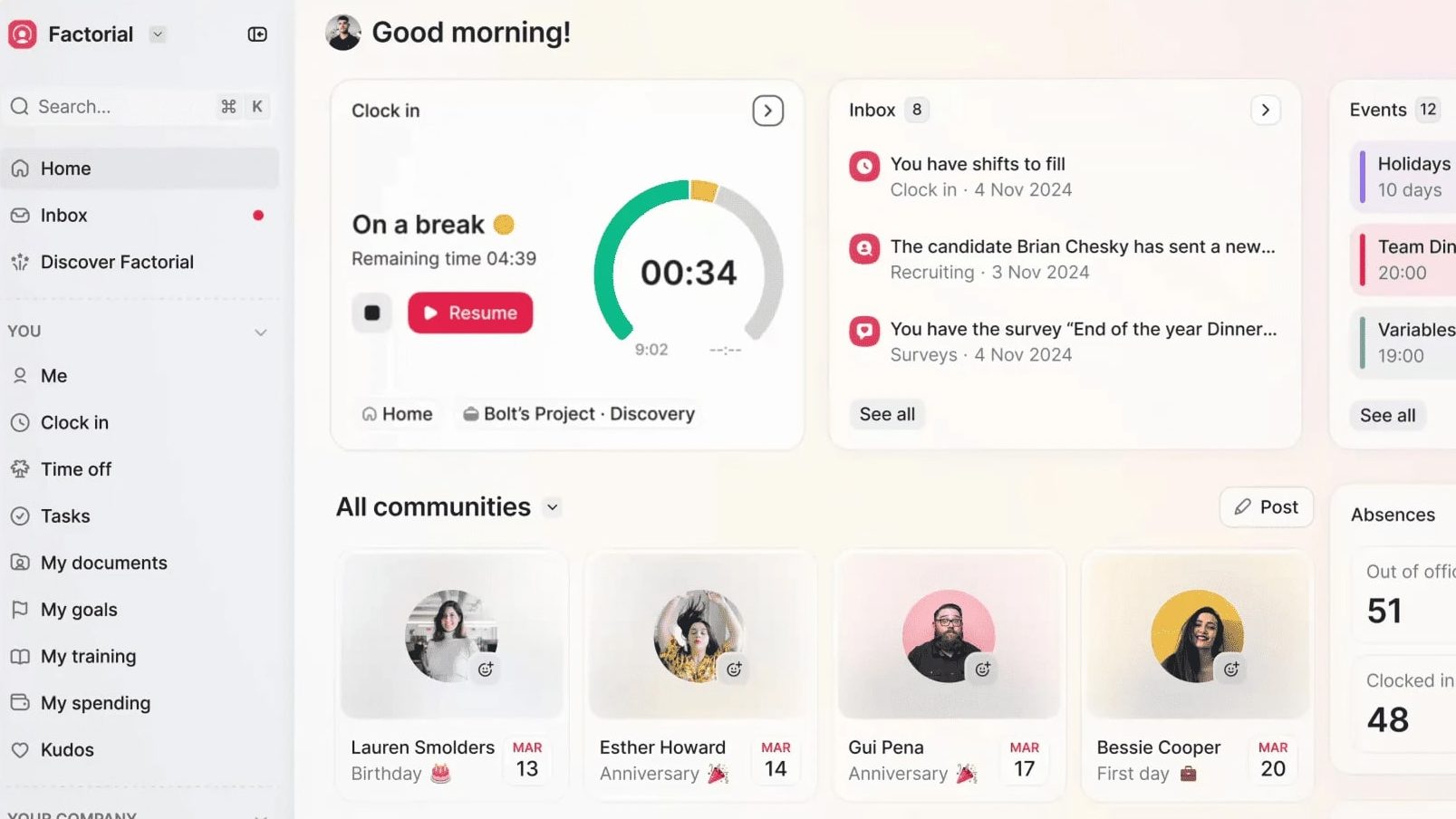
Tip: Combine People Analytics with satisfaction surveys and qualitative feedback from managers to get a comprehensive view of the team.
3. Team well-being as a competitive advantage
Well-being is no longer just a “nice-to-have.” The employee experience directly influences talent attraction and retention. Flexibility, work-life balance, mental health, and personalized compensation are increasingly critical factors.
In practice, a realistic approach to well-being has a positive impact on productivity, engagement, and retention. Companies that consistently prioritize this approach build more stable and cohesive teams.
4. Culture of growth and professional development
Talent stays where it can thrive. Career plans, continuous learning, and clarity regarding career advancement are becoming top priorities.
Performance reviews, measurable goals, and recognition programs help highlight progress, define next steps, and reinforce commitment.

5. Continuous training and personalized learning
Training is evolving toward models that are more flexible, practical, and tailored to real-world needs. Reskilling and upskilling programs are becoming essential for maintaining competitiveness and adapting to change.
Example: competency-based learning paths, micro-content, e-learning platforms, and internal mentoring programs.
6. Strategic recruitment and candidate experience
Hiring quickly doesn't mean hiring better. The challenge is to balance speed with quality, avoiding reactive decisions that lead to high turnover and a cultural mismatch.
Process automation, ATS systems, a clear value proposition, and a carefully crafted candidate experience help attract better-matched candidates and build stronger working relationships.
7. Comprehensive digitization of HR and finance
The digitization of HR is no longer just about “having a tool”; it’s about integrating processes and data to gain control, traceability, and efficiency. This includes, for example:
- Time management, absences, and shifts.
- Documentation and administrative procedures.
- Performance reviews and ongoing feedback.
- Integrated data for analysis (People Analytics).
- Integration with financial systems to manage costs, forecasts, and planning.
When HR is digitized in a coherent manner, it improves operations and enhances the ability to make decisions that have an impact on the business.
How to Turn HR Trends into Talent Strategies for 2026
To put these trends into practice rather than leaving them at the theoretical level:
- Identify which trends are a priority for your organization.
- Define KPIs and metrics to measure progress.
- Implement technology that automates processes and enables real-time analysis.
- Design sustainable training and wellness programs.
- Review the impact on a regular basis and adjust your initiatives accordingly.
Conclusion
Human Resources trends in 2026 reflect a clear shift: more data, more technology, and a greater focus on people. Organizations that stay ahead of the curve will be better able to attract top talent and make more strategic decisions.

Frequently Asked Questions
Trends set the stage, but a talent strategy allows organizations to prioritize and implement them in line with their specific goals and resources.
AI applied to HR, People Analytics, team well-being, professional development, and process digitization.
Identifying business priorities, defining clear KPIs, and using technology to measure impact and make data-driven decisions.